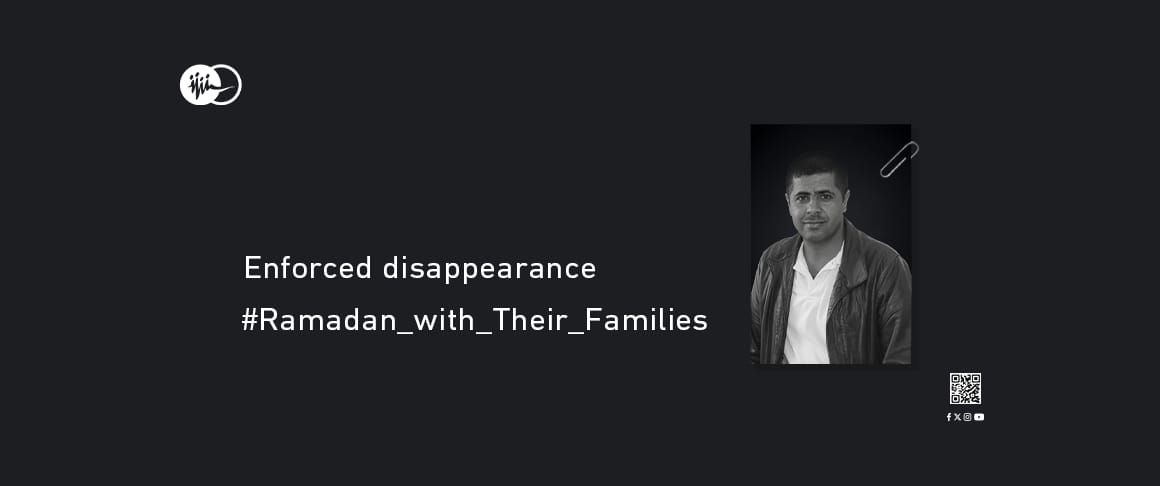
When the Search for a Livelihood Becomes a Source of Extended Absence and Endless Suffering
On a quiet autumn morning on October 5, 2022, Akram Muhammad Husayn Da'r Al-Bukhaiti left his home in Sana'a, unarmed and without slogans. He wasn't seeking glory or power; he was searching for a simple job that could help support his family, which had been exhausted by the suspension of salaries and the prolonged war. Akram is a civil servant in the Student Affairs Department at Sana'a University—an educated, calm man who had never engaged in politics and never anticipated that his quest for employment would turn into a tragedy.
Accompanied by a friend, he embarked on a short journey to Marib, a governorate that promised job opportunities, with a salary that could sustain his family. However, at the first checkpoint at the entrances of Marib, hope came to a halt, and something else began. He was told there, in simple words yet heavy in implications: "You are from the Houthis; you are from the Al-Bukhaiti family; you came to spy."
Even after his denial, Akram was taken to the Political Security headquarters in Marib, affiliated with the internationally recognized government and associated with the Yemeni Congregation for Reform party. From that moment, all contact was lost. Long hours of anxiety turned into days of silence, then weeks with no news. His wife, who awaited his return daily, never heard his voice.
After two months, the family reported receiving unofficial information that he was in what resembled a dark basement within the Political Security, drinking contaminated water, with access to water sources only every two days. A friend who had been taken with him was later released and was the first to inform Akram's family of his whereabouts. That faint information felt like a spark of hope in a long, dark night.
His wife tried to reach him, contacting the head of Political Security, merely asking for a voice. The reply she received was brief: he was detained due to "suspicion" because his name resembled that of others. They asked her to come in to provide a guarantee, but she was alone in a city that didn't open its doors for her, and her family couldn't accompany her for fear of what might happen to them too.
Then came the call she never expected to be her only remaining connection in this world. A brief call, lasting less than a minute, in which he said with a faint voice: "I am okay... take care of the kids." Those were few words—a message from a man who didn’t want to burden his wife with the full reality of his circumstances.
He called only twice in 2023, using the same terse style, and today his voice has been silenced for over a year. When his wife attempted to inquire again, she received a different response: "We do not have anyone by that name." A blatant denial of what had been acknowledged months before.
Today, Akram's wife and their four children live in a painful dream suspended between reality and waiting— a home without a father, and hearts burdened with a single unresolved question: Is he still alive? Is he being treated with dignity? Will he return?
This is not just an individual story; it is a vivid portrayal of the impacts of arbitrary detention and enforced disappearance on individuals and their families, on their right to work, to freedom, and to life itself. It is a call for officials to fulfill their responsibilities: to reveal his fate, to enable contact with his family, and to conduct a transparent investigation into the circumstances of his detention.
The authorities of the internationally recognized government in Marib and the formations affiliated with the Yemeni Islah party in the governorate must reveal the fate of Akram Al-Bukhaiti and all others who have been forcibly disappeared under their jurisdiction, put an end to the crime of enforced disappearance that continues to affect numerous victims in all areas under their control, and ensure reparation for the victims and their families, and justice for them.