Worsening Water Insecurity Threatens Millions of Yemenis Amid Ongoing Conflict
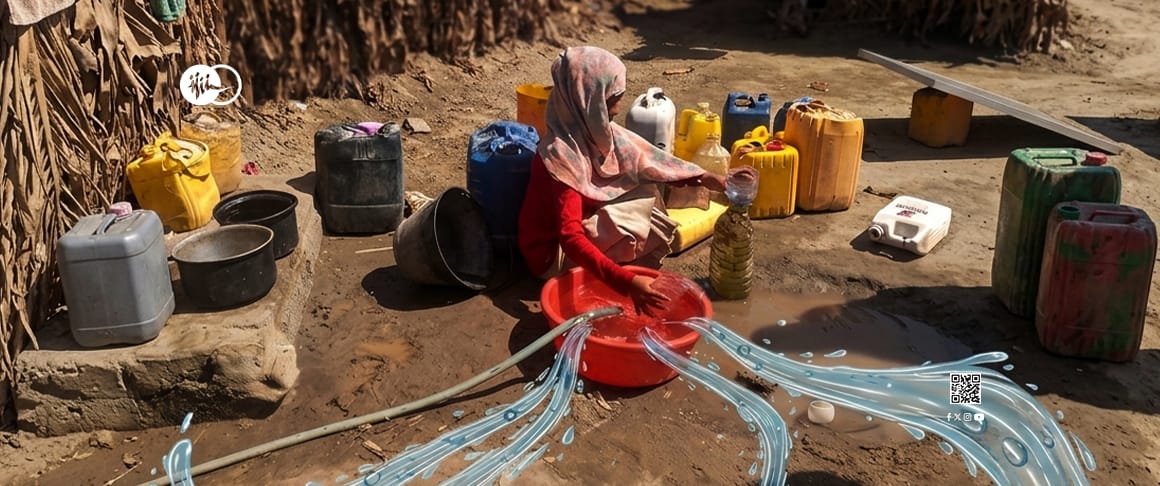
Mwatana for Human Rights stated, in a statement issued on the occasion of World Water Day, observed annually on 22 March, that millions of Yemenis are facing a severe water crisis that has worsened since the outbreak of the conflict on 21 September 2014. Over nearly eleven years, the crisis has been exacerbated by the direct targeting of water sources by parties to the conflict, restrictions imposed on civilians’ access to water, the indirect consequences of the conflict, and the failure of the various de facto authorities to fulfill their obligations to ensure water security for populations under their control.
Mwatana reported that it documented 77 incidents of direct violations targeting water facilities between 2014 and 2025. These included the denial of water access to beneficiaries, aerial and ground attacks, incidents involving landmines and explosive remnants, and the use of live ammunition. The Ansar Allah (Houthi) group bears responsibility for 51 of these incidents out of the total documented cases, while the Saudi/UAE-led coalition is responsible for 17 incidents. The internationally recognized government and formations affiliated with the Islah Party are responsible for 8 incidents, and the Joint Forces bear responsibility for one incident.
Mwatana further emphasized that the deliberate targeting of water infrastructure by parties to the conflict in Yemen—including aerial and ground attacks on water sources, civilian facilities, power generation stations, and fuel supplies, as well as the presence of landmines and explosive objects near water sources and along main roads—has prevented individuals from accessing water. This has forced civilians to seek alternative sources at high costs that are largely unaffordable due to the economic crisis and widespread loss of income among the vast majority of Yemeni civilians. In addition, many projects aimed at providing water and facilitating access to it—often implemented by humanitarian organizations as part of their interventions to alleviate the water crisis—have been restricted or prevented.
Mwatana further added that sieges and the closure of main roads have restricted access to clean water for hundreds of thousands of people in many areas, most notably in the city of Taiz. The siege imposed on the city by the Ansar Allah (Houthi) group, which controls the areas where the primary water sources that used to supply the city before the war are located, has led to an almost complete disruption of water supplies to areas under the control of the internationally recognized government and formations affiliated with the Islah Party. This has compelled residents to seek alternative water sources and to resort to using highly saline and non-potable water. At the same time, the cost of obtaining water has more than tripled compared to pre-siege levels. Water scarcity and poor quality have also contributed to the spread of numerous diseases in the city, including cholera, typhoid, schistosomiasis, and others. This crisis continues to recur intermittently.
Radhiya Al-Mutawakel, Chairperson of Mwatana for Human Rights, stated: “The water crisis has worsened since the outbreak of the conflict, becoming one of the most brutal manifestations and impacts of the war on civilians in Yemen. Millions of Yemenis now find themselves in continuous suffering, struggle, and competition to secure their most basic need—water. Accessing water has become an exhausting and costly process.” She added: “The parties to the conflict and the authorities affiliated with them across different regions must fulfill their obligations to ensure sufficient, non-discriminatory, and timely access to water for civilians, and hold accountable all those who target water resources or use them as a weapon of war—costs that civilians continue to bear on a daily basis.”
According to a statement published by the United Nations Development Programme (UNDP) in Yemen in mid-October 2025, Yemen is among the most water-scarce countries in the world. Per capita water availability does not exceed 80 cubic meters per year—far below the global threshold—and more than 14.5 million people in Yemen lack access to safe drinking water and sanitation services.
Mwatana for Human Rights called on all parties to the conflict to comply with international humanitarian law and international human rights law, to cease targeting vital civilian infrastructure—foremost among them water infrastructure—to facilitate humanitarian interventions, particularly those related to water, sanitation, and hygiene, to enhance civilians’ access to clean water, and to put an end to violations and practices that obstruct individuals’ enjoyment of this right. The organization further urged accountability for those responsible for such violations and the adoption of measures to prevent their recurrence.