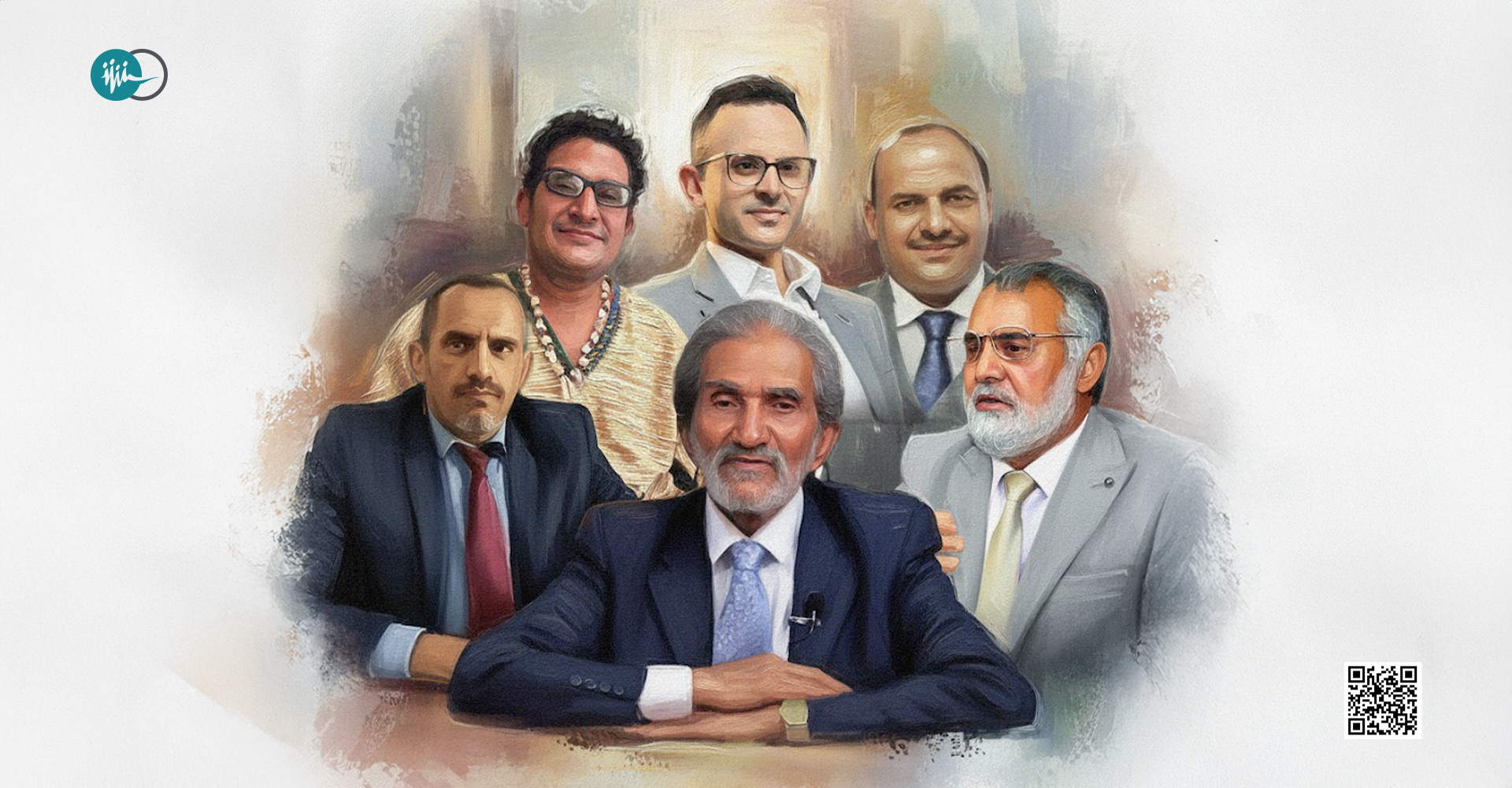
Mwatana Urges the Ansar Allah (Houthi) Group to Release Al-Awadi, Al-Alfi, Shaab, and Dozens of Others Arbitrarily Detained
Mwatana for Human Rights stated that the Ansar Allah (Houthi) group has detained dozens of civilians in successive waves of arrests, including local peace mediators, academics, writers, journalists, human rights defenders, government employees, leaders and members of political parties, and participants in peaceful events commemorating the September 26 Revolution. The arrests also included male and female humanitarian, development, and diplomatic workers, as well as staff of UN agencies and international and local organizations.
Since the beginning of 2025 through October, the organization has documented at least 392 cases of arbitrary detention and enforced disappearance in Sana’a, Dhamar, Hodeidah, Ibb, Saada, and parts of Taiz and Al-Dhalea, along with other areas under the group’s control. The organization affirmed that the documented cases of arbitrary detention and enforced disappearance constitute violations of the Constitution of the Republic of Yemen, Yemen’s applicable laws, the principles of justice and human rights, and relevant international conventions and treaties.
Radhya Al-Mutawakel, Chairperson of Mwatana for Human Rights, said: “the Ansar Allah (Houthi) group’s continued implementation of large-scale arbitrary detention and enforced disappearance campaigns, outside any legal framework and in complete isolation from the judicial system, reveals a recurring pattern of violations aimed at silencing what remains of civil society, consolidating control over the public sphere, and dismantling all spaces for independent civic action, including peaceful initiatives seeking to break free from the cycle of war.”
Al-Mutawakel added: “Fear has become the shared feeling among victims’ families and communities; no group is any longer safe from arbitrary detention and enforced disappearance.” She continued: “These arbitrary arrests not only violate individuals’ fundamental rights and spread fear among civil society and the families of detainees, but also undermine public trust in the rule of law and the independence and integrity of the judiciary. They deepen social divisions and threaten prospects for coexistence, justice, and long-term peace.”
In September 2025, the Ansar Allah (Houthi) group detained dozens of participants in events commemorating the September 26 Revolution. For years, the group’s authorities have carried out large-scale arbitrary arrest campaigns targeting people taking part in the annual commemoration of the September 26 Revolution, which coincides with the end of the group’s celebrations marking its armed entry into the capital Sana’a on September 21, 2014.
The year 2025 saw a notable and troubling escalation in arbitrary detention campaigns that targeted dozens of leaders and members of various political parties, including the Yemeni Socialist Party, the General People’s Congress, the Yemeni Congregation for Reform (Islah), and the Arab Socialist Ba’ath Party. The campaigns included prominent figures such as Ghazi Al-Ahwal (Secretary-General of the General People’s Congress), Rami Abdulwahab Mahmoud Abdulhamid (Head of Foreign Relations in the Ba’ath Socialist Party), and Mohammed Al-Shughadri (Head of the Media Department of the Islah Party in Dhamar), in addition to dozens of party leaders and members in Sana’a, Dhamar, Ibb, Taiz, and other regions.
In late August 2025, areas under the control of the Ansar Allah (Houthi) group witnessed one of the largest campaigns of arbitrary detention targeting staff of UN agencies and organizations in Yemen. According to the United Nations, the total number of its employees detained by the Ansar Allah (Houthi) authorities reached 54, including individuals who have been held for more than three years. The group launched a wide-ranging raid campaign on the headquarters of UN agencies and organizations in Sana’a following the Israeli airstrike of August 8, 2025, which targeted a meeting of the group-affiliated government and resulted in the killing of the prime minister and several ministers and the injury of others.
Arrest campaigns continued to escalate while dozens of employees of local and international organizations and private companies remain under arbitrary detention to this day, following a large-scale campaign launched by the group between May 29 and June 7, 2024. During that campaign, the Ansar Allah (Houthi) authorities arrested staff from the Social Fund for Development, Partners Yemen, the Civil Alliance for Peace, Deep Root Consulting, Raneem Yemen, Present Foundation, and other international and local organizations.
Examples of Documented Incidents
In this statement, Mwatana for Human Rights presents a limited number of examples of cases of arbitrary detention and enforced disappearance documented by the organization, amid an atmosphere of intimidation experienced by the families of detainees and the disappeared, while the organization continues its documentation and legal follow-up.
Dr. Hamoud Al-Awdi and Anwar Shaab
On the morning of Monday, 10 November 2025, a force affiliated with the Security and Intelligence Service raided the premises of the Dall Center for Social Studies in Sana’a, a research and media center specializing in issues of citizenship, democracy, and identity. The officers searched the premises, confiscated computers and research documents, and detained Dr. Hamoud Al-Awdi (79), the center’s founder and director, one of Yemen’s foremost intellectuals, a professor of sociology at Sana’a University, the head of the Civil Alliance for Peace and Reconciliation, and a leading local peace mediator. They also arrested Anwar Khaled Shaab (45), the Alliance’s secretary.
Engineer Abdulrahman Al-Alfi
On the same day, Engineer Abdulrahman Al-Alfi (70) was summoned to the headquarters of the Security and Intelligence Service, where he was detained without a judicial warrant, without any charge, and without his family being allowed to visit him, despite his critical health condition. He suffers from chronic illnesses, including five cardiac stents, diabetes, and loss of vision in one eye.
Fuad, Al-Alfi’s son, told Mwatana about his father’s health condition: “My father needs urgent medical care. He relies on five cardiac stents and suffers from chronic illnesses. Through a brief phone call after he was detained, he asked us to deliver his treatment plan and his computer, but to this day he is still deprived of medical care and visits.”
Abdullah Al-Alfi, a relative of the victim, told Mwatana in an interview: “Abdulrahman and his colleagues carried nothing but a project for dialogue and peace. They worked openly, with the knowledge of the authorities in control, and never engaged in any secret or hostile activity.”
Poet Auras Al-Iryani
On 22 September 2025, poet and satirist Auras Mohammed Aqil Al-Iryani (42) was detained near his home in the Al-Marawna neighborhood of Sawaan in the capital Sana’a. The day after his arrest, his wife filed an official report at the “Al-Ummal” police station. For several days, security authorities denied any knowledge of his whereabouts. Later, Al-Iryani made brief contact with his family to reassure them, without disclosing the location, circumstances, or reason for his detention.
Lawyer Abdulmajid Sabra
On 25 September 2025, at around 4 p.m., security forces affiliated with the Ansar Allah (Houthi) authorities raided the office of lawyer Abdulmajid Musleh Fare’ Sabra (50), located in the Shamila neighborhood in Al-Sabeen District of the capital Sana’a. After several days in detention, Sabra contacted his family without revealing his location or any charges against him. He remains in arbitrary detention at the time of this statement.
Journalist Majed Zaid
On 22 September 2025, at around 5:30 p.m., armed forces affiliated with the Ansar Allah (Houthi) authorities detained journalist Majed Zayed from Khawlan Street in Al-Thawra District of the capital Sana’a, under unclear circumstances and without presenting any judicial warrant or providing any official explanation for the arrest. After nearly a month in detention, Zayed was able to contact his family for only a few minutes, without disclosing his place of detention or his legal status.
Aref Qatran and His Son
On the morning of 21 September 2025, just days before the anniversary of the September 26 Revolution, a force consisting of three military vehicles and a private taxi carrying about 20 individuals in civilian clothes, led by a security officer from the Sana’a Governorate Security Directorate, detained Aref Mohammed Saeed Qatran (44) and his son Abdul Salam (21), both farmers from Hamdan District. No charges were presented, and the two were transferred to the Hamdan complex for three days before being moved to an undisclosed location.
Rami Abdulwahab Mahmoud
On Sunday, 3 August 2025, at around 4 p.m., Rami Abdulwahab Mahmoud Abdulhamid (52), Head of Foreign Relations for the Socialist Ba’ath Party, was traveling in his car with two companions on his way to a friend’s home. Upon reaching the Rimas roundabout on Hadda Street in Al-Sabeen District, an armored vehicle and two military trucks belonging to the Ansar Allah (Houthi) authorities blocked their path. Rami was detained in one of the trucks, while his companions were taken in another, without the identity of the arresting force being clarified or any legal warrant being presented. His family has not been allowed to contact or visit him since his detention.
Dr. Ayed Al-Sayyadi
On the evening of Thursday, 25 September 2025, while Dr. Ayed Saleh Ahmed Al-Sayyadi (66), a sociology scholar and member of the Yemeni Socialist Party, was returning home to the Farah neighborhood in the city of Dhamar, four armed men in civilian clothes carrying automatic rifles intercepted him. They were traveling in a black taxi. The armed men, who later identified themselves as belonging to the Security and Intelligence Service, detained Al-Sayyadi and took him away without charge and without allowing him to contact his family, who remained unaware of his fate for days. More than a month later, his son was informed that his father had been transferred to Sana’a.
Mohammad Al-Yafai
On Thursday afternoon, 25 September 2025, Mohammad Mohammed Saleh Al-Yafai (53), a member of the General People’s Congress, was in the old central qat market in the city of Dhamar when an armed man in civilian clothes carrying an automatic rifle appeared, detained Al-Yafai, and took him away without presenting any judicial warrant or specifying any charges. Since his detention, his family has not been allowed to visit him.
Zuhour Al-Yafai told Mwatana: “I was returning from Aden after completing the procedures for obtaining a passport, and when I arrived home my mother told me that my father had not returned. By the afternoon we confirmed that he had been detained. When my brother Ibrahim tried to visit him, they denied holding him. After my brother insisted firmly, they asked him to return the next day. When he did, they took the clothes from him but did not allow him to see my father.”
She added: “On 29 October, my brother received a phone call from the Security and Intelligence Service telling him that our father was ill and that he should come to visit him. But when he arrived, he was surprised to find that they handed him my father’s clothes, unused, and then informed him that our father had been transferred to Sana’a. Since that day, we have no information about his health condition or where he is being held.”
Naji Al-Mawti
On Thursday, 18 September 2025, at around 8:30 in the morning, Naji Mas‘ad Ali Hassan Al-Mawti (55), a teacher, mosque imam, and member of the Islah Party, left his home in the city of Damt in Al-Dhalea governorate looking for a taxi to take his ten-month-old child to the hospital. While he stood with his wife and daughter, a white Hilux pickup carrying three armed men—two in military uniforms and one in civilian clothing—intercepted him and detained him. His arrest coincided with the approach of the September 26 Revolution anniversary. Since then, his family has received no information about him, and he remains forcibly disappeared to this day.
How Did the Arrest Campaigns Ignore Legal Safeguards?
The incidents documented by Mwatana for Human Rights—including the detention of intellectuals, academics, writers, journalists, civil activists, members and affiliates of political parties, participants in peaceful gatherings commemorating the September 26 Revolution, and staff of various organizations—show that the Ansar Allah (Houthi) authorities carried out broad arrest campaigns targeting different civilian groups indiscriminately. In most cases, the arrests were linked to the exercise of legitimate rights protected by law, such as freedom of opinion and expression, humanitarian work, political participation, and engagement in public life. The arrests appear driven by political and security motives rather than by pursuit of justice, public safety, or proper enforcement of the law.
The right to personal liberty—one of the most sacred constitutional and legal rights—is guaranteed under Article (48/a) of the Yemeni Constitution, which prohibits deprivation of liberty except by a judicial order issued by a competent court. Article (11) of the Code of Criminal Procedure also states that no one may be deprived of their liberty except by order of the competent authorities and in accordance with the law.
The International Covenant on Civil and Political Rights, in Article (9/1), prohibits arbitrary arrest or detention and requires that any deprivation of liberty be based on clear and precise legal grounds.
Despite this, the Ansar Allah (Houthi) authorities carried out arrest campaigns without judicial warrants, without official records, and without any legal justification—rendering such arrests invalid under both Yemeni constitutional law and international law.
The documented cases reveal severe violations of detainees’ rights to be informed of the reasons for their arrest and any charges against them—rights clearly established in legal and constitutional provisions, most notably Article (48/c) of the Constitution, which requires judges or prosecutors to inform detainees of the reasons for their arrest and to enable them to present their defense; Article (73) of the Code of Criminal Procedure, which requires immediate notification of the reasons for arrest; and Article (9/2) of the International Covenant.
The documented incidents also highlight a series of abuses involving the misuse of pre-trial detention, which Yemeni law considers an exceptional measure subject to strict limitations. Instead, it has been turned into a tool for political punishment, extracting confessions, or silencing critical voices.
The law requires that the alleged offense be punishable by more than six months’ imprisonment, that sufficient evidence exist, and that law enforcement authorities not hold any detainee for more than 24 hours from the moment of arrest and detention unless legal grounds exist, there is an actual need to complete the gathering of evidence, and all legal rights of the detainee are guaranteed.
The law grants the Public Prosecution the authority to investigate for no more than seven days following the detention or handover of the accused, provided that legal grounds exist and all rights are preserved. Any extension of pre-trial detention beyond seven days requires an order issued by the competent judge at the primary court, based on a reasoned request from the Prosecution and submission of the case file and supporting evidence before the seven days expire. The judge may extend detention for no more than 45 days, and any further extension falls under the authority of the Court of Appeals, which may authorize an additional period not exceeding 45 days.
In contrast, Mwatana has documented detentions that lasted for weeks and months without referral to the Public Prosecution or presentation before a judge, violations of maximum legal limits, detentions without legal grounds, and denial of any opportunity to challenge detention orders. These practices render such pre-trial detentions unlawful and void, with some cases extending for a year or longer.
The documented testimonies indicate that detainees were deprived of fundamental rights during arrest and detention, foremost among them the right to communicate with the outside world, the right to notify their families, the right to legal counsel, and the right to refrain from making statements in the absence of a lawyer—rights guaranteed under Article (48/b) of the Constitution and Article (6) of the Code of Criminal Procedure. Lawyers were also prevented from attending interrogations or accessing case files, undermining the right to defense and stripping judicial proceedings of their meaning.
The absence of independent judicial oversight over these detentions further aggravates their severity. The whereabouts of several detainees were concealed, and attempts by their families or lawyers to reach or communicate with them failed. This gives these cases the classification of enforced disappearance, according to the international definition, which combines deprivation of liberty with the denial of the person’s detention or the concealment of their fate or location. Enforced disappearance is a crime under international law, and no exceptional circumstance may be invoked to justify it.
The risk of violations increases when detainees are held in unofficial places of detention, in facilities outside the law, and without judicial authority or oversight, creating an opaque environment where torture, ill-treatment, or coercion to extract confessions becomes more likely. Article (7) of the International Covenant on Civil and Political Rights and the Convention Against Torture affirm the absolute prohibition of torture without exception and invalidate any statement or confession obtained under coercion.
Call for the Release of Detainees
Mwatana for Human Rights renews its call on the Ansar Allah (Houthi) group to immediately release Dr. Hamoud Al-Awdi, Engineer Abdulrahman Al-Alfi, and Anwar Shaab, as well as all arbitrarily detained and forcibly disappeared persons, including peace mediators, academics, writers, journalists, lawyers, political opponents, and staff of local and international humanitarian organizations. The organization urges the group to cease using deprivation of liberty as a tool of intimidation or political retaliation.
Mwatana for Human Rights also calls on the Ansar Allah (Houthi) group to respect national laws and international standards, to guarantee victims’ legal rights, and to ensure that security and judicial bodies are subject to independent judicial oversight in a manner that upholds justice, the rule of law, and the dignity and fundamental rights of every Yemeni.
Legal Support for Detainees
Through a network of male and female lawyers distributed across various governorates, Mwatana for Human Rights continues to provide legal assistance to victims and their families, based on the principle that procedural justice is not a privilege but an inherent right guaranteed under Yemeni law and international human rights standards.
The unit’s intervention begins with a meticulous and systematic process of documenting the victims’ circumstances and the conditions of their detention, based on direct testimonies, reliable information, and informed consent from the victims’ families. Based on this documentation, Mwatana proceeds with legal action by submitting complaints and legal memoranda demanding the release of detainees, disclosure of their fate, and ensuring their basic rights, including family communication, access to legal counsel, provision of health care, and protection from being held in unlawful places of detention.
Since the beginning of the arrest campaigns targeting UN staff, international and local organization workers, activists, academics, and civilians, Mwatana has activated its emergency response through local teams of lawyers. These teams began contacting victims’ families and providing necessary legal support, while simultaneously addressing security and judicial authorities in Sana’a and other areas under the control of the Ansar Allah (Houthi) group, and conducting advocacy visits to demand the immediate and unconditional release of detainees and the protection of their legal rights.