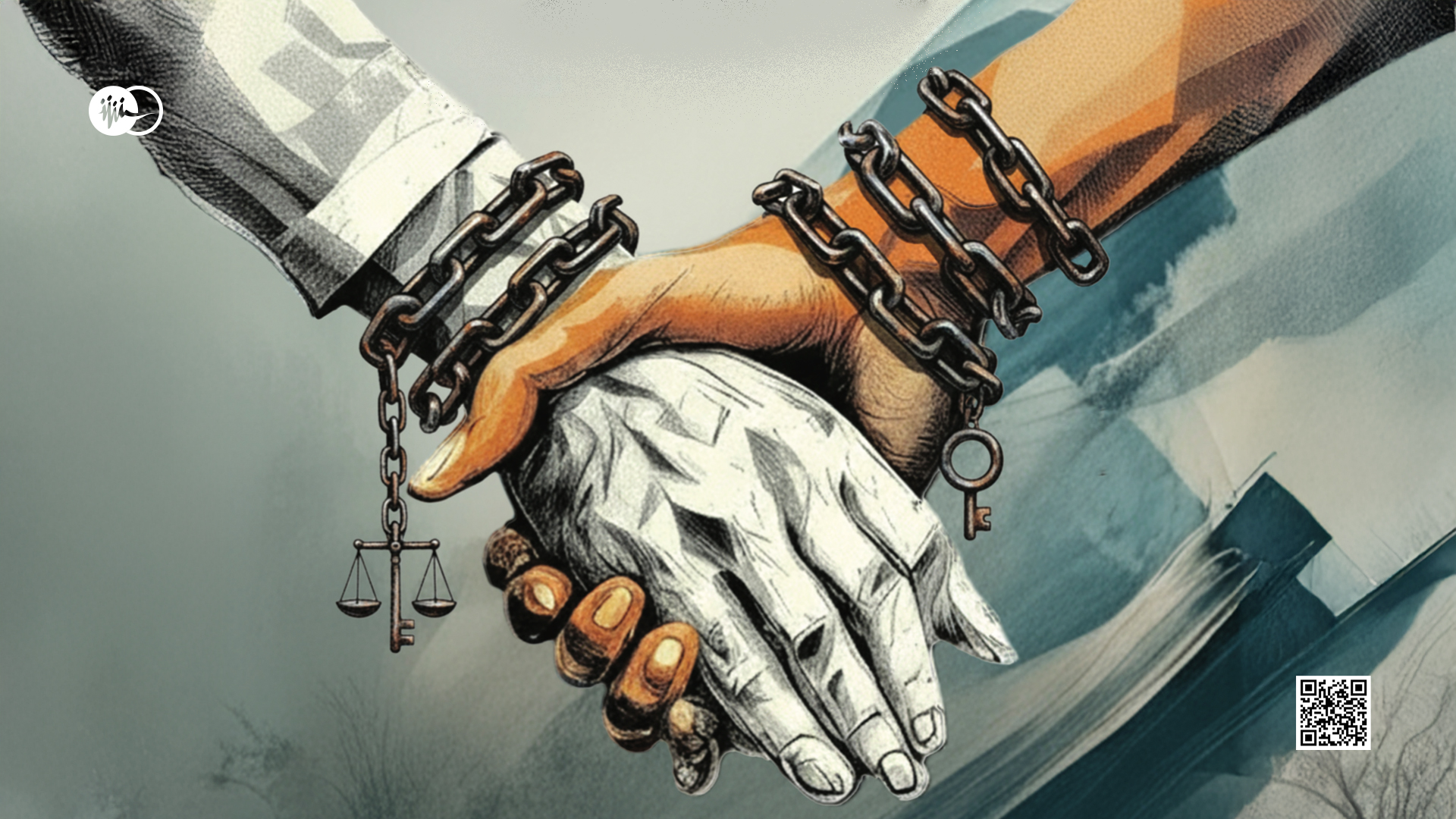
Mwatana launches a research paper on lessons learned from engaging civil society and victims in transitional justice processes
Mwatana for Human Rights, in a statement launching its research paper “Pathways of Partnership: Lessons on Engaging Civil Society and Victims in Transitional Justice Processes in Bosnia and Herzegovina, Colombia, and the Philippines”, on the occasion of the first anniversary of the Transitional Justice Forum, held on September 26, emphasized that achieving transitional justice that addresses the legacy of longstanding grievances and violations, and lays the foundation for equal citizenship, the rule of law, and principles of good governance, is the only way to save Yemen and pull it out of the cycle of protracted conflicts and injustices.
Mwatana added that the success of the envisioned transitional justice process in Yemen, in the post-conflict stage, is contingent upon the effective inclusion of diverse groups—foremost among them victims and vulnerable groups—in the design and implementation of transitional justice programs. This also requires fostering collective awareness of transitional justice, its mechanisms, and its importance, while studying the societal context and its specificities within any upcoming experience. These are foundations upon which civil society bears the greatest responsibility to work and deliver.
The research paper released by Mwatana focuses on examining and analyzing mechanisms for engaging independent civil society organizations and victims in transitional justice processes in Bosnia and Herzegovina, Colombia, and the Philippines—countries that underwent transitional justice experiences following protracted conflicts that resulted in grave human rights violations and an accumulated legacy of grievances.
Radhya Almutawakel, Chairperson of Mwatana for Human Rights, said: “The time has come for us to work for peace, and for a future where everyone enjoys rights and justice. This will not be achieved without recognizing the grievances and violations that have affected different segments of society over decades and working to address them.” She added: “Every successful transitional justice experience worldwide began with modest attempts, and succeeded when those societies realized it was their only option to escape the scourge of conflict and division.”
Almutawakel continued: “The long history of violations and grievances in Yemen makes transitional justice the only option for Yemenis to change their future and put an end to the perpetuation of violations, conflicts, and their consequences. As individuals and as civil society, we are committed to working to achieve this goal.”
Mwatana pointed out that this paper discusses the engagement of civil society and victims in transitional justice processes, the challenges these experiences faced, and the strengths and weaknesses of each case, in addition to analyzing the context and dynamics of each, and exploring ways to connect these lessons to the Yemeni context in a manner that informs and guides future efforts.
In its statement, Mwatana called on the parties to the conflict in Yemen, as well as the international community and civil society institutions, to work toward enhancing the chances of success of a transitional justice process in Yemen in the post-conflict stage and ensuring its effectiveness by placing human rights issues and transitional justice at the heart of peace negotiations and any resulting agreements, in a way that guarantees victims’ rights to redress and reparation.
Mwatana also urged support for programs that build the capacities of independent civil society organizations and victims in the field of transitional justice, as well as support for documentation and monitoring efforts, and the creation of a safe environment for their work, including protecting independent civil society organizations from campaigns of retaliation and intimidation carried out by all parties to the conflict.
This paper, prepared by Mwatana in cooperation with students from Central European University, comes within a series of methodological approaches, most notably research papers, studies, and reports that address transitional justice topics, its elements, requirements, and mechanisms. It examines multiple experiences around the world in order to provide a solid knowledge base for identifying applicable mechanisms, best practices, and potential challenges. This contributes to achieving a deeper understanding of all dimensions of transitional justice, raising awareness of its importance, and providing inputs that can inform and guide work at all stages of pursuing transitional justice in Yemen.