Detention that bears no resemblance to the tranquility of the city of Seiyun
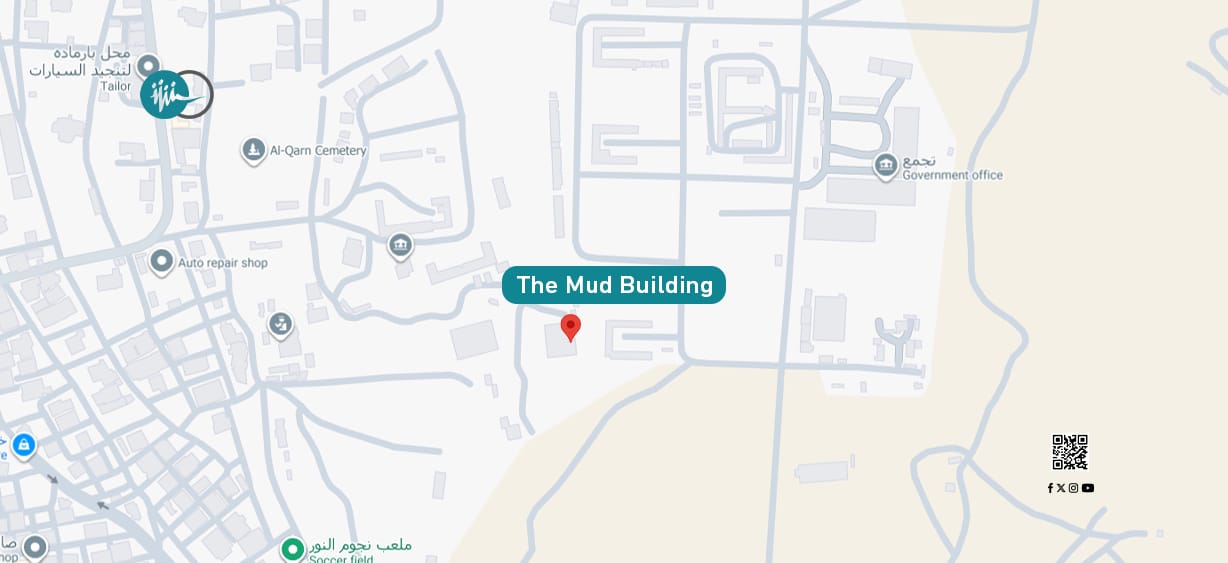
Following the outbreak of the conflict in Yemen—specifically since 2015—and with the expansion of security and military operations against Al-Qaeda in Wadi Hadramawt, the mud building located within the perimeter of what was known as the First Military Region headquarters, affiliated with the internationally recognized government, in the Marima area of Seiyun city, Hadramawt Governorate, was transformed from a mere abandoned facility into an unofficial place of detention, operating outside the framework of the formal judiciary and under the direct supervision of Saudi-led coalition forces.
Paradoxically, what has come to be known as the illegal “mud prison,” constructed of mud in accordance with the traditional architectural style prevalent in Wadi Hadramawt, is situated a short distance—estimated at approximately 500 feet—from the official central prison.
The “mud prison” is subject to stringent security measures, beginning with a main gate on a paved road that leads to a winding path with around 30 concrete blocks placed to impede rapid movement, extending for approximately 300 meters. At the end of the road, there is a large iron gate leading to a wide-open area containing dispersed buildings, including the headquarters of the military region command, a large fenced yard housing two offices affiliated with the military prosecution, in addition to the mud building itself, which is used as an illegal detention site. The facility is surrounded by heavy security, including armed soldiers and two armored vehicles stationed at its gate, as well as guards positioned on the rooftop of the building.
Documented testimonies indicate that detainees in this prison have been subjected to enforced disappearance and multiple forms of physical and psychological torture, amid the absence of effective judicial oversight and the denial of fundamental legal guarantees. Detainees are often accused of charges related to “terrorism cases” or alleged affiliation with extremist organizations.
In this context, Mwatana for Human Rights, through its field team, documented the detention of 24 victims at this facility, including 12 victims who were subjected to physical and psychological torture, and six victims who were subjected to enforced disappearance.
Mwatana for Human Rights calls for the immediate closure of the unofficial detention center known as the “mud prison,” the disclosure of the fate of forcibly disappeared persons, and the release of those arbitrarily detained. The organization further calls for an end to all forms of detention outside the framework of the law; the subjection of all detention facilities to the authority of the judiciary and the Public Prosecution; the accountability of those responsible for committing violations at the center; redress and reparations for victims; and efforts to ensure that such violations do not recur in the future.