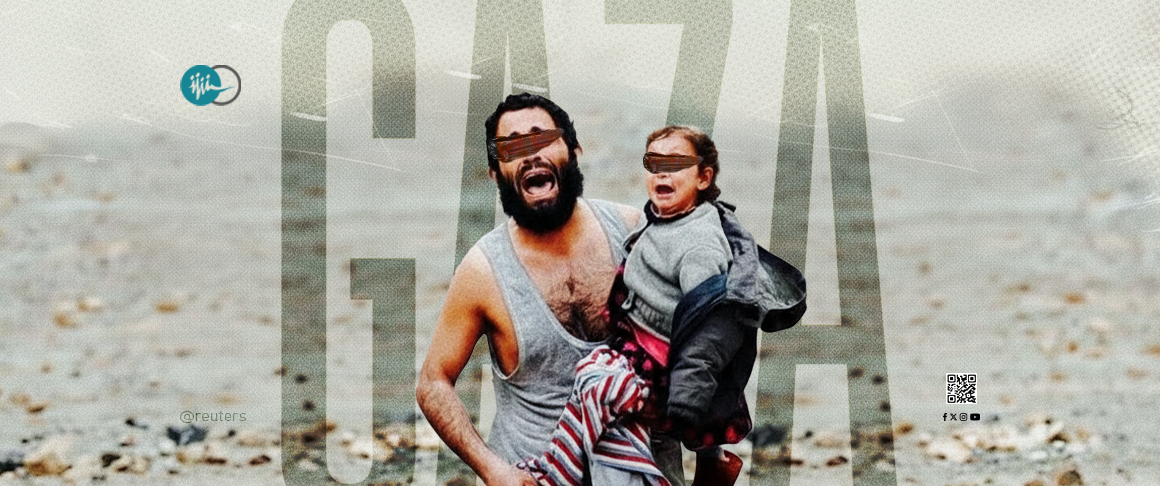
The International Community Must Act to Stop Genocide and Impose Effective Sanctions on Israel
Mwatana for Human Rights, in a statement issued on the second anniversary of Israel’s bloody war on the Gaza Strip, called on the international community to immediately fulfill its legal, moral, and humanitarian obligations to halt Israel’s horrific genocidal war and protect the Palestinian people from atrocities aimed at undermining their very existence. The organization urged the international community to use all available political, diplomatic, and economic pressure tools, including a comprehensive ban on all military and security exports to Israel, the imposition of effective sanctions on Israeli officials, the suspension or restriction of bilateral agreements related to military and security cooperation, and active support for international judicial mechanisms—foremost among them the International Criminal Court—and for independent UN investigative commissions.
Mwatana stated that since October 7, 2023, Israel has, in full view of the world, perpetrated a deluge of genocide, war crimes, crimes against humanity, and other grave violations. These include deliberate attacks on civilians, the use of starvation as a weapon of war, obstruction of humanitarian and medical aid, and the systematic destruction of infrastructure through targeting residential buildings, schools, hospitals, health facilities, public service utilities, and other civilian objects, in flagrant violation of international humanitarian law and international human rights law.
According to data from the Palestinian Ministry of Health and the Palestinian Central Bureau of Statistics, the genocidal war carried out by Israeli forces over the past two years has claimed the lives of at least 65,382 people, including at least 18,592 children, 12,400 women, and 4,412 elderly Palestinians, while the number of those injured has reached no fewer than 166,985, 70% of whom are women and children. Approximately two million Palestinians have been displaced within the Gaza Strip.
Additionally, over the course of two years, Israeli forces have systematically targeted Gaza’s infrastructure through intensive aerial bombardments and ground incursions, deliberately attacking civilian objects protected under international humanitarian law—including schools, universities, and residential units—alongside health facilities such as hospitals and clinics, as well as humanitarian aid workers and journalists.
According to the Palestinian Central Bureau of Statistics, more than 330,500 housing units have been damaged by military operations, with no fewer than 102,067 buildings completely destroyed, in addition to the destruction of at least 823 mosques and three churches. The same operations have led to the complete destruction of at least 143 schools and universities, while at least 366 educational institutions have been partially destroyed.
As a result of no fewer than 697 Israeli attacks on hospitals, medical facilities, and staff, at least 1,411 medical personnel have been killed. Approximately 94% of Gaza’s hospitals have been partially or fully damaged or destroyed, with only 17 out of 36 hospitals still partially functioning. At least 177 ambulances have also been targeted. According to the same data, at least 246 journalists, 800 teachers and academic staff, 203 UNRWA employees, and 113 members of the Civil Defense have been killed.
Throughout the two-year war, Israel has carried out large-scale forced displacement operations, expelling hundreds of thousands of civilians from northern Gaza to the south and preventing their return, while inflicting devastating damage on their property. These acts have severe implications for the continuity of civilian life, the right to housing, and the prohibition of forced demographic change, as nine out of ten residents of the Gaza Strip have been displaced multiple times.
Oxfam confirmed in a report issued on September 9 that Israel’s intention to forcibly displace nearly one million civilians is both illegal and impossible, describing Israel’s coercion of Palestinian civilians to flee to areas unfit for human habitation as a grave violation. The report noted that Israel has designated only 42.8 square kilometers as refugee camps for Palestinians—an extremely small area, inadequate to accommodate the displaced population. Oxfam stated that displaced persons are being forced to live in areas suffering from severe resource shortages in the southern part of the Gaza Strip, while most of the infrastructure is concentrated in the central part of the Strip—highlighting what the organization described as the “unrealistic and inhumane” nature of the plan.
Meanwhile, the UNRWA (United Nations Relief and Works Agency) confirmed in a report on the humanitarian crisis in the Gaza Strip, issued on July 18, 2025, that Israeli forces have issued at least 55 displacement orders since the collapse of the ceasefire in the early hours of March 18, 2025. According to the report, approximately 297.6 square kilometers of land are now under displacement orders out of Gaza’s total area of 365 square kilometers—meaning that around 86.3% of the Gaza Strip is either designated as a military zone, under displacement orders, or both.
One of the gravest violations committed by Israel, the report stressed, is the use of starvation as a weapon of war, targeting hundreds of thousands of Gaza residents. This has been carried out through a comprehensive blockade and restrictions on the entry of humanitarian aid, including food and medicine, while around 98% of Gaza’s agricultural land, livestock farms, and fisheries have been destroyed—crippling local food production. These conditions are compounded by the collapse of healthcare systems, sanitation, and markets.
Mwatana for Human Rights stated that reports and appeals from specialized international organizations have warned that famine levels in the Gaza Strip have reached alarming, life-threatening levels, endangering two million Palestinians suffering from severe food insecurity and malnutrition due to the extreme scarcity of food supplies. According to a recent World Health Organization (WHO) report released in July 2025, famine in Gaza has reached its most acute stage. The WHO recorded 74 famine-related deaths during 2025, of which 63 occurred in July alone, including 24 children under five, one child over five, and 38 adults. The WHO noted that most victims died either upon arrival at health facilities or shortly thereafter, showing signs of severe emaciation.
The WHO further reported that the global acute malnutrition rate—measuring malnutrition among children aged 6 to 59 months—had tripled in June 2025. Meanwhile, over 40% of pregnant women were suffering from malnutrition, exposing them and their unborn children to serious and potentially fatal health risks.
A joint statement by the World Food Programme (WFP), UNICEF, and the Food and Agriculture Organization (FAO) confirmed that food insecurity in the Gaza Strip has reached Phase 5 of the Integrated Food Security Phase Classification (IPC)—the highest and most catastrophic level, signifying famine conditions. This classification is based on surpassing three critical thresholds: extreme food deprivation, famine-related deaths, and widespread acute hunger. The joint statement also reported that more than 1,060 people were killed and 7,200 injured while trying to reach aid distribution points since May 27, 2025.
The United Nations, in a statement issued on August 22, 2025, confirmed the occurrence of famine in the Gaza Strip and warned that it was likely to spread to additional areas within weeks. The UN noted the rapid escalation of acute malnutrition and stated that nearly one-third of Gaza’s population—approximately 641,000 people—are living under catastrophic humanitarian conditions. These dire circumstances have forcibly displaced around two million Palestinians, who continue to flee in search of the bare minimum necessary for survival.
In an effort to isolate the Gaza Strip from the world and conceal the crimes it commits against Palestinian civilians—as well as the systematically worsening humanitarian crisis—Israel has deliberately targeted journalists through airstrikes. According to estimates by the Committee to Protect Journalists (CPJ), more than 195 Palestinian journalists have been killed in Gaza, noting that Israeli officials have repeatedly and deliberately labeled journalists as “terrorists” without any evidence, in an apparent attempt to justify attacks on media workers.
In a statement issued on June 6, 2025, the UN Office of the High Commissioner for Human Rights (OHCHR) affirmed that targeting journalists and directing attacks against persons protected under international humanitarian law constitute a grave violation and a war crime.
Numerous international reports have documented the acts of genocide committed in the Gaza Strip over the past two years, urging urgent action to halt these violations. In a recent statement issued by Amnesty International in early September 2025, commenting on a United Nations report that documented a series of serious violations against civilians in Gaza amid the ongoing military escalation, the organization highlighted indiscriminate killings of civilians through direct attacks on homes, residential neighborhoods, and health facilities. Amnesty further reported that Israeli forces used white phosphorus during military operations targeting Palestinian IDPs in camps, in addition to arbitrary detentions of civilians and the systematic destruction of Gaza’s infrastructure.
According to a recent report by the United Nations Independent International Commission of Inquiry, issued on September 16, 2025, the Commission concluded that Israeli forces have committed four out of the five acts that constitute genocide under the 1948 Convention on the Prevention and Punishment of the Crime of Genocide. The report stated that the genocidal campaign in Gaza aims to destroy Palestinians in whole through deliberate killings of civilians, torture, the imposition of deadly living conditions, and targeting pregnant women. It held Israel fully legally responsible for its failure to prevent the genocide and to hold perpetrators accountable, concluding that Israel’s use of policies—including starvation and the imposition of inhumane living conditions—provides clear evidence of genocidal intent.
It is worth noting that a previous report by the Office of the High Commissioner for Human Rights, issued on November 11, 2024, confirmed that Israel committed grave violations, disregarding the International Court of Justice’s orders, by imposing a comprehensive blockade on the Gaza Strip and carrying out a series of violations that targeted the most vulnerable groups—women and children. The report further noted that children represented the largest proportion of verified deaths.
Efforts of the International Criminal Court (ICC)
Since the outbreak of the latest war in the occupied Palestinian territories on October 7, 2023, the International Criminal Court (ICC), through the Office of the Prosecutor, has activated a series of legal and field measures to address the crimes committed from that date to the present. These measures build upon the ongoing investigation opened on March 3, 2021, concerning the “Situation in Palestine,” which investigates crimes allegedly committed since June 13, 2014, in Gaza and the West Bank, including East Jerusalem.
On October 17, 2023, the Office of the Prosecutor issued a public appeal, calling on anyone possessing information or evidence related to events in Palestine and Israel to submit it in support of the ongoing investigations.
On October 29, 2023, the Prosecutor of the ICC announced, during a press briefing held at the Rafah crossing on the Egyptian side of the border, that the Office of the Prosecutor had begun investigating war crimes, crimes against humanity, and other crimes within the Court’s jurisdiction committed in the State of Palestine and Israel, in accordance with the Court’s mandate.
In subsequent statements and field visits later in 2023, including from Cairo, Ramallah, inside Israel, and Rafah, the Prosecutor reiterated the necessity for all parties to comply with international humanitarian law, stressing unequivocally that the use of starvation as a method of warfare and the denial of humanitarian relief constitute crimes under the Rome Statute. He further called for the urgent entry of humanitarian aid into Gaza.
On November 17, 2023, the Office of the Prosecutor received a formal joint referral from five States Parties to the Rome Statute — South Africa, Bangladesh, Bolivia, the Comoros, and Djibouti. Based on this referral and the accumulation of evidence, the Prosecutor confirmed that the investigation was ongoing and had expanded to include the escalation of violence and hostilities since October 7, 2023.
On May 20, 2024, the Prosecutor announced the submission of applications for arrest warrants in the Situation in the State of Palestine. On the Israeli side, the applications included Prime Minister Benjamin Netanyahu and Defense Minister Yoav Gallant, based on alleged war crimes and crimes against humanity committed since October 7, 2023. The charges included using starvation as a method of warfare in violation of Article 8(2)(b)(25) of the Rome Statute, inflicting great suffering, willful killing, intentionally directing attacks against civilians, extermination, persecution, and other inhumane acts.
The applications also sought arrest warrants against three Hamas officials: Ismail Haniyeh, Head of Hamas’s Political Bureau; Yahya Sinwar, Hamas leader in the Gaza Strip; and Mohammed Diab Ibrahim al-Masri, the military commander of Hamas’s armed wing. They were charged with war crimes and crimes against humanity committed in Israeli settlements, the Gaza envelope area, and the territories of Israel and the State of Palestine on October 7, 2023, including willful killing, taking hostages, torture, outrages upon personal dignity during captivity, and other crimes. The applications were accompanied by a report from independent experts supporting the legal assessment and jurisdictional basis.
On November 21, 2024, Pre-Trial Chamber I rejected two challenges filed by Israel regarding the Court’s jurisdiction and issued arrest warrants for Benjamin Netanyahu and Yoav Gallant. On April 24, 2025, the Appeals Chamber accepted an Israeli appeal, ruling that the Pre-Trial Chamber had procedurally erred by dismissing the challenge without sufficient discussion. The decision was therefore annulled and remanded for substantive reconsideration. However, the Chamber rejected Israel’s request to suspend the arrest warrants. The majority also dismissed another Israeli appeal concerning the notification procedure under Article 18(1), though two judges dissented.
Finally, on July 16, 2025, the Pre-Trial Chamber rejected Israel’s request to annul or suspend the arrest warrants, confirming that they remain in force until a final ruling on jurisdiction is issued.
Judgment of the International Court of Justice (ICJ)
In late 2023, South Africa filed a case before the International Court of Justice (ICJ) concerning Israel’s violations against Palestinian civilians. On January 26, 2025, the Court ordered Israel to refrain from committing acts of genocide and to take immediate measures to ensure the delivery of humanitarian assistance.
On March 28, 2024, the Court noted a deterioration of humanitarian conditions. Later, on May 24, 2025, the ICJ issued an urgent ruling concerning Rafah, ordering Israel to halt military operations and guarantee the entry of humanitarian aid.